
You are here
Car Seat Safety Tips
Car Seat Safety Tips
 The best way to keep your child safe in the car is to use the right car seat in the right way. Here are some car seat safety tips to protect your most precious cargo.
Hard Facts about Safety in Cars
- Road injuries are one of the leading causes of preventable deaths and injuries to children in the United States.
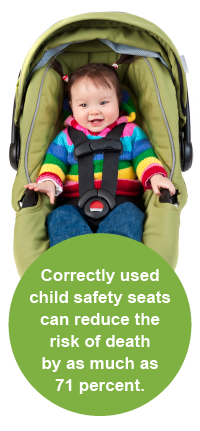
- Correctly used child safety seats can reduce the risk of death by as much as 71 percent.
- More than half of car seats are not used or installed correctly.
Top Tips about Car Seat Safety
- Buying the right car seat. Your baby needs to ride in a rear-facing car seat as long as possible until 2 or more years. When your child has outgrown that seat, you are ready for a forward-facing car seat. Get more details about buying the right car seat for your child.
- Installing your car seat. You’ll need to decide on using either the seat belt or lower anchors to secure your car seat. Both are safe, but don’t use them both at the same time. Once your child is forward facing, it is important to use the tether with the seat belt or lower anchors. Get more details about installing your car seat.
- Getting the right fit. A properly-fitted harness gives the best possible protection for your child. Here are more details about getting the right fit for your child.
- When to change your car seat. Look on the car seat label to make sure your child is still within the weight, height and age limits for that seat. Get details about when to change your car seat.
Learn More
Many kids spend a lot of time in the car, so it is important to learn how to keep them safe on the road. There’s a lot to know! Learn more car seat safety tips to protect your child.


Resources