Find Your Country

Safe Kids Worldwide currently has 23 members across the globe.

Our members work together to educate families, create safer environments and advocate for improved laws to protect children.

Learn More

Australia

Kidsafe/Safe Kids Australia

Safe Kids Australia/The Child Accident Prevention Foundation of Australia (Kidsafe) is the leading
Australian non-governmental, not-for-profit charitable organization dedicated to preventing unintentional childhood injuries. In 2001, Kidsafe became a member of Safe Kids Worldwide.

Each year about 240 Australian children (aged 0-14 years) are killed and 60,000 are hospitalized because of unintentional injuries. In order to reduce childhood unintentional injuries, Kidsafe designs programs and interventions to create awareness of current issues that affect children’s safety and provide practical support to families to improve the safety environment for children. Kidsafe’s programs cover risk areas such as road safety, drowning, fire and poison prevention, home safety and playground safety.

Highlights:

Celebrating National Kidsafe Day to Make Roads Safer

National Kidsafe Day was held on October 25 to increase awareness of unintentional childhood injuries and their prevention, as well as the valuable work of Kidsafe - the Child Accident Prevention Foundation of Australia, in public education, advocacy and research into the causes and prevention of unintentional childhood injury.

Kidsafe coordinated events in each of the six states and many territories to celebrate National Kidsafe Day which coincides with Children’s Week in Australia. The 2011 National Kidsafe Day Awards was also held to recognize the achievements of children and adults in the field of child injury prevention and safety promotion in the country. The focus of the 2011 awards was on road safety awareness, advocacy and action in three categories: Business Award, Local Champion Award, and Kids Teaching Kids Award.

A tip sheet was also circulated to share prevention ideas with local community groups, schools, child care centers, play groups and families to keep children safe. Other activities included free Restraint Checking Day, a Cook-off and Driveway Safety campaign.

Kidsafe Centers Aim to Educate and Promote Child Safety

Preventable injuries are the leading cause of heath for children ages 1-14 in Australia. Kidsafe Centers were developed to educate and promote child safety among adults and children ages 0-14 through demonstrations, tours, sale of safety products and professional advice. Key components of the Centers include Safety Houses, Storefronts, Playground Advisory Units, Advice Lines, and Mobile education vans.  Safety houses are located in three locations; storefronts are located in or near six major children’s hospitals around Australia; the Playground Advisory Unit was set up in New South Wales in 2001 but now has expanded into a number of other states and territories.

  • Safety houses: Kidsafe provides long standing demonstration safety houses associated with the Kidsafe Center and shop front. The houses are open for display and provide conducted tours for both adults and groups of children.
  • Storefronts: The stores provide restraint service, sell and demonstrate safety products and provide safety information on site, over the telephone and through the internet. Some locations also provide additional information for other NGOs and government agencies on non-injury issues for children (e.g. lifesaving, sudden infant death syndrome, preventing neglect and abuse, etc.)
  • Playground Advisory Units: Resources include a playground safety kit containing 12 information sheets on playground safety, Australian Standards, and legal responsibilities. A National Playground Conference is held every two years.
  • Advice Lines: Free Telephone information services on all aspects of child safety.
  • Mobile Education Van: A combination of the mobile restraint services, information service and shop front, depending on the funding structures and community need.


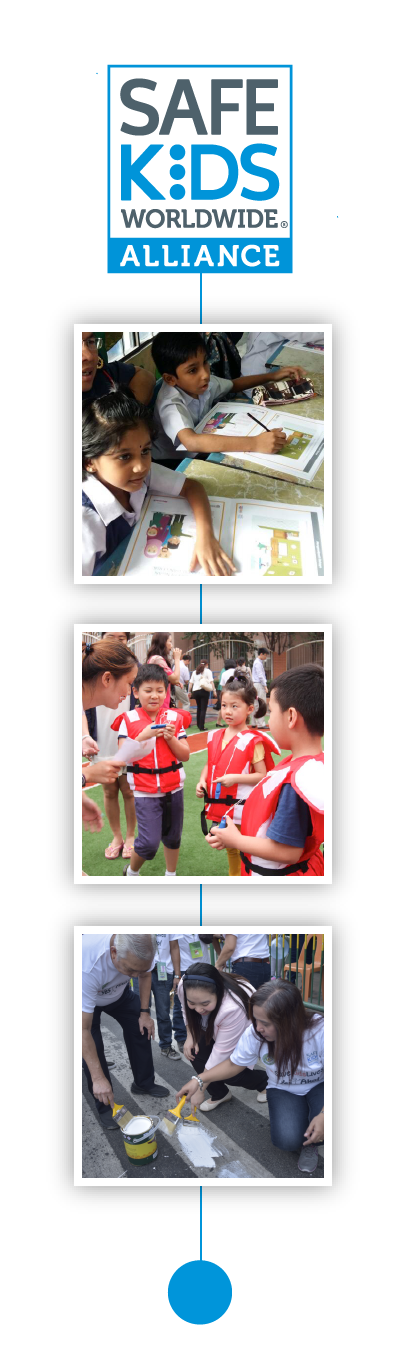
Australian children being safe in and around water by wearing PFDs (life jackets)