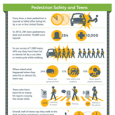
One of the most interesting aspects of working at Safe Kids is that we get to play "detective.” If we see a statistic we find alarming, like that every hour of every day a teen is hit by a car and killed or injured in the U.S., we get to try to figure out the five W’s, who, what, where, when and why. Last year, we discovered that the pedestrian death rate for teens is twice that of younger children. This year, we took our detective role one step further. We surveyed 1000 teens ages 13-18 to understand more about their walking habits: what they’re doing, and why.
My son, Murphy, is passionate about playing football. Along with that passion comes bumps, bruises, and a fair share of helmet clashing. The physical intensity and risk of injury rises each year as he ages, and his practice schedule is a grueling 6-8 hour-per-week regimen. Murphy managed to play relatively injury free until well into his third year in 2012.
To better understand what young athletes, parents and coaches are confronted with in youth sports, Safe Kids Worldwide surveyed 1,000 young athletes, 1,005 coaches and 1,000 parents.